

Encouraging true exploration in the travel scene.
→ Plan your next trip with an itinerary that actually lets you discover
ROLES
Product Designer
Brand Designer
Prototyper
TIMELINE
36 hours
Jan. 2026
TEAM MEMBERS
Reymart Gutierrez
Mavis Lo
Ibrahim Ma
TOOLS
Figma Design, Slides
01
Context
Where do we need uniqueness, engagement, and exploration in digital spaces?
In this 2-day designathon, we were challenged to address homogeneity in digital spaces. Looking at social media and online platforms, we noticed that most people default to the same destinations abroad, even if it’s “underrated”.
02
User Research
Pain points across the trip planning experience.
Following 3 twenty-minute user interviews, we identified three.
Difficult to find local, cultural experiences in oversaturated media channels.
Decision fatigue hits during an already stressful planning process.
Disappointed by overhyped tourist attractions.
03
Reworked Problem Statement

How might we encourage travellers to be more spontaneous and explore local culture in a society shaped by trends and conformity?
04
Ideation & Research
Our ideation struggled in creating a concept that users would be incentivized to use. We analyzed the most common ways that people would plan destinations on their trip.



Alternatives like search engines, generative AI, and social media posts will generate the most popular, recommended, and SEO-friendly results.



Additional organizational platforms must then arrange these spots into an itinerary or list.
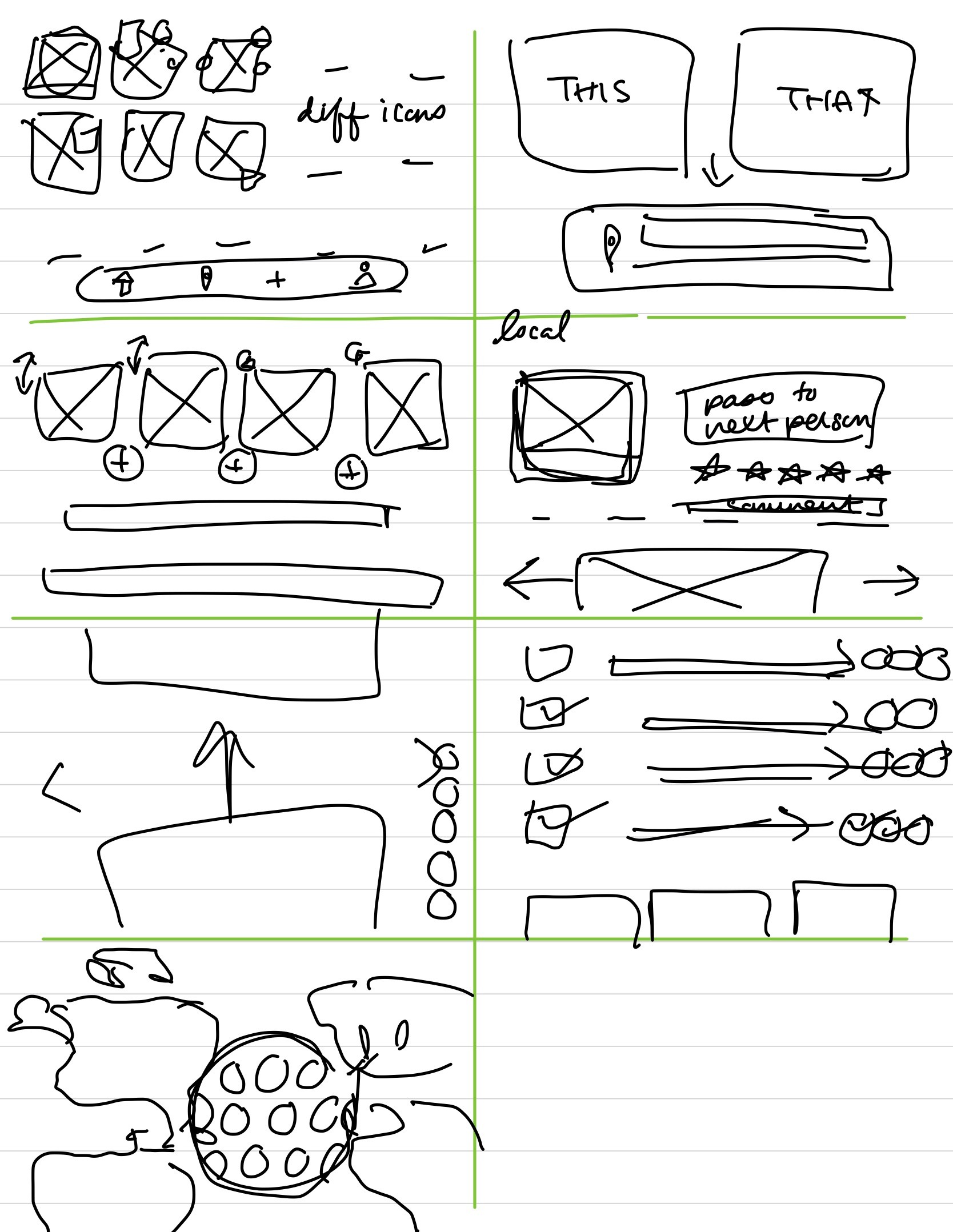
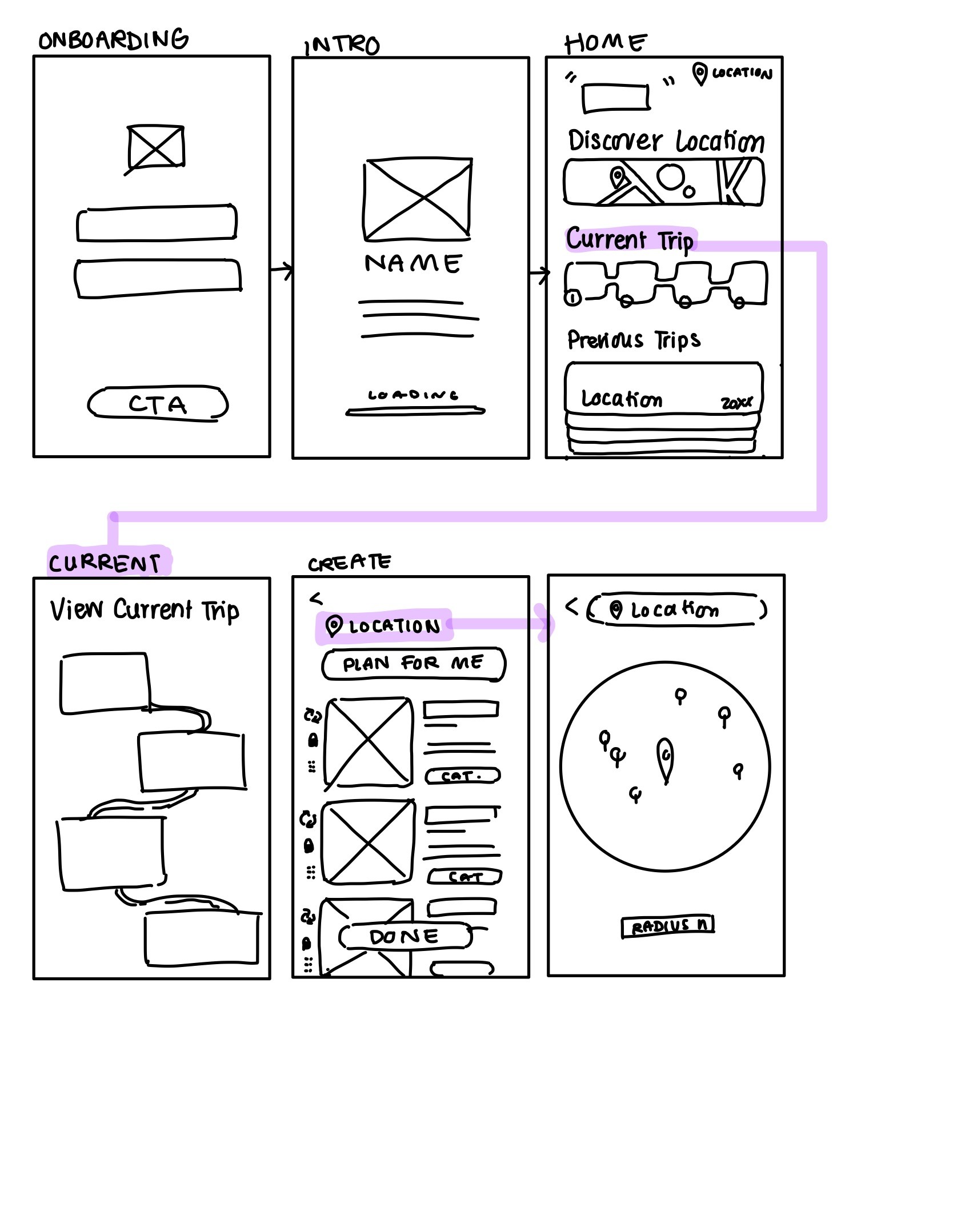
With these considerations, our Crazy Eights ideations had a clearer direction to follow. One of my one-minute ideas made the cut after deliberation. We had to ensure the app was substantial enough to incentivize and market, which would centralize and ideate “hidden gems” and unknown spots for travellers to actually explore.
05
Branding

Clean and clear for on-the-go.
06
Final Solution
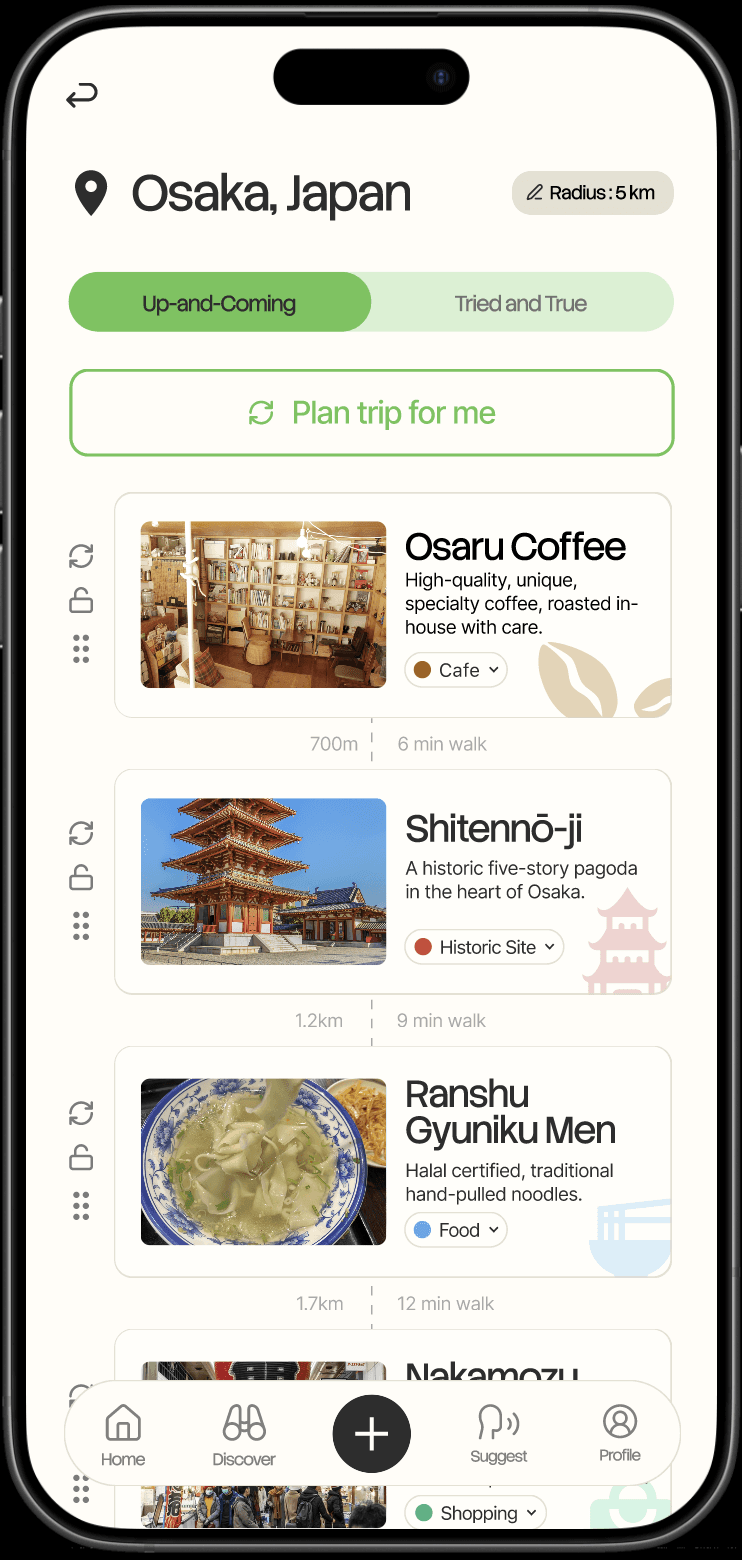
Receive varied spots collected from:
low-friction posts
travel blogs & boards
local suggestions
or, generate "tried-and-true" spots
Each travel spot can be refreshed for another option if it doesn't fit with the users preferences, still allowing for freedom of choice — we recognized that there would be dropoff if minor customizations were not accommodated.
Generating a travel itinerary in this way allows users to truly explore and determine what they enjoy through real experiences, while maintaining organization and travel details.
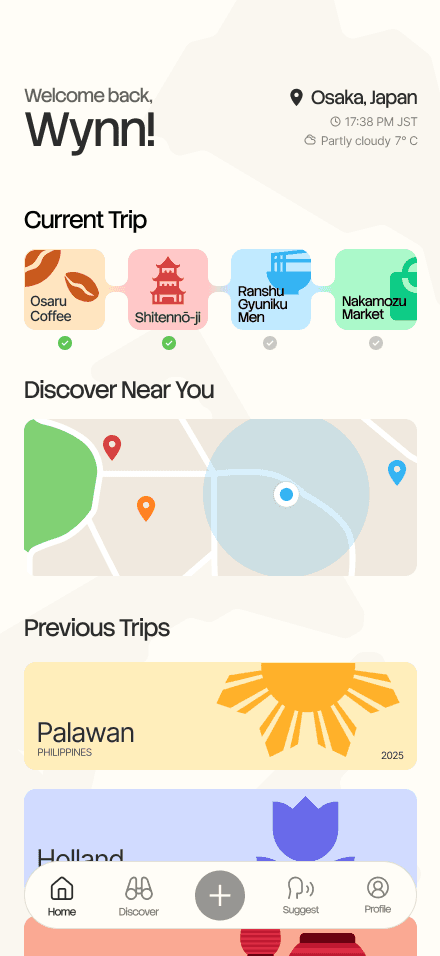
Home Page
Accessible trip itinerary, nearby spots, and trip history.
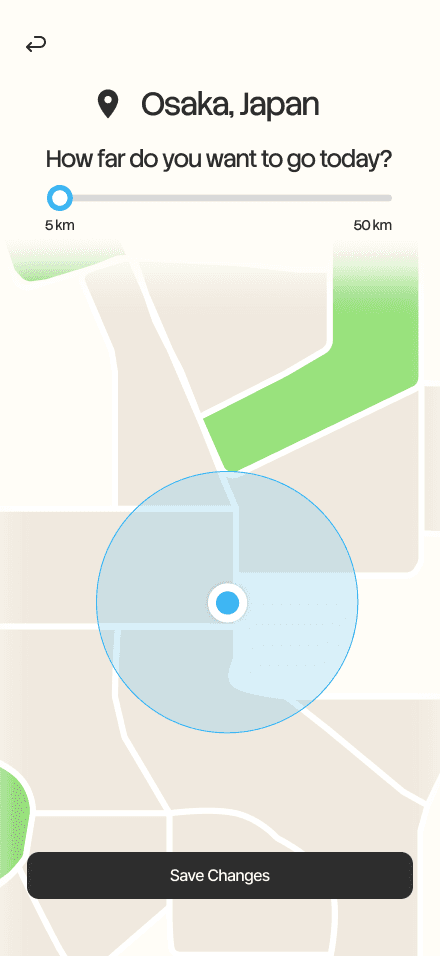
Set Location
Suggested spots stay within your vicinity and create an optimized path.
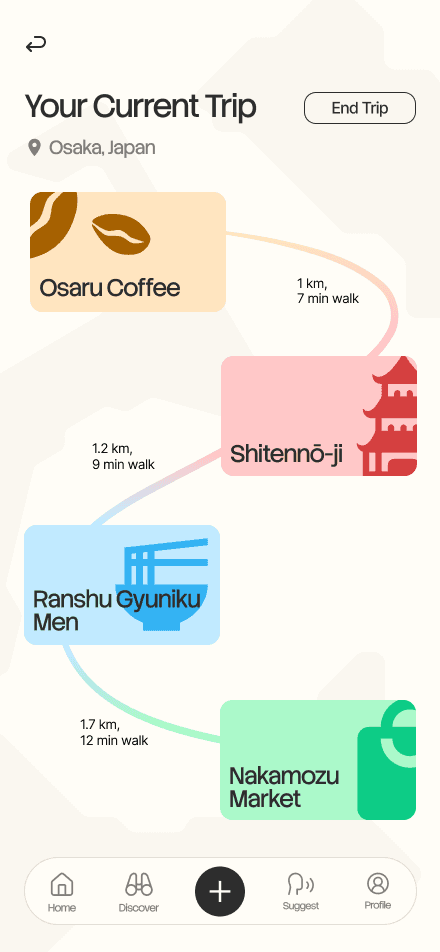
Current Trip
See distance and walk times, each spot categorized by colour.
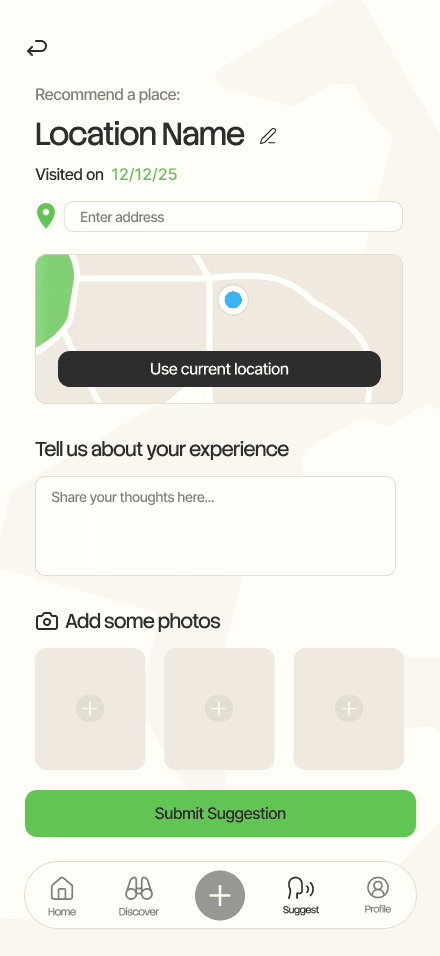
Suggestions
If you find your own hidden gem, suggest it to Wander so others can find it too (on a rolling basis).
07
Takeaways & Next Steps
This project truly tested my approach to thinking out-of-the-box, as part of the challenge was reintroducing uniqueness into a homogenous digital world. One of our judges relayed it best:
If you have an unconventional idea, you need to have conventional UI. If you have unconventional UI, you need to have a conventional idea.
If there is both a radical idea and a radical way to display it, it won’t connect with users and becomes unintuitive. I recognized this as we continued to develop our idea: a refined "random" generator needed to be presented in a clear manner if we wanted users to experience it as a necessary feature rather than a gimmick. Our ideation was slowed due to this initial consideration, as we wanted to ensure this idea was something worth and easy to implement into a user’s travel flow. Once we got past this obstacle, things started to fall into place.
In terms of next steps, there are a few things to consider.
Scale (what's too small?)
Structure Wander’s implementation for smaller travel spots to account for lack of local recommendations or coverage.
Safety Measures
Logistics of expanding our vetting system to ensure all recommendations are safe and legitimate.
Scope
Globally handle translations, local security guidelines, and feasibility in maintaining a constantly expanding database.